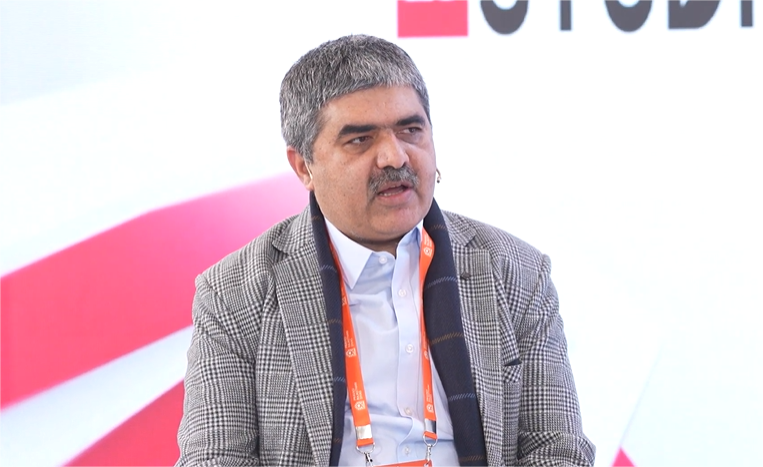
At Pravasi Diwas 2025, Rajasthan’s growth narrative is being shaped through focused discussions on investment, education, and the role of the Pravasi community in strengthening the state’s economic foundations. With the government positioning Rajasthan as an attractive destination for enterprise, education has emerged as a critical pillar—one that supplies skilled manpower, nurtures entrepreneurship, and anchors long-term development.At ET Studios, Onkar Bagaria, Chief Executive Officer, Vivekanand Global University, shares his perspective on how Pravasi participation, university-led innovation, and Rajasthan’s deep-rooted knowledge ecosystem can work together to take the state and its capital city, Jaipur, to new heights.
The Rajasthan government has launched the Pravasi Rajasthani Summit as a key initiative. How do you assess its importance for the state?
This is an excellent initiative by the Government of Rajasthan, especially at a time when the state is actively seeking new investments. Rajasthanis and Pravasis are widely recognised as part of India’s business and entrepreneurial community, and engaging with them directly is both logical and strategic.
If Pravasis return to Rajasthan and invest here, it will be a major achievement for the state. This initiative creates a platform where emotional connection, business intent, and policy direction come together. It also reinforces the idea that Rajasthan values its diaspora and sees them as long-term development partners rather than mere external stakeholders.
Education has been a major theme in today’s discussions. How do you see Rajasthan’s education sector contributing to future growth?
Whenever we talk about investment, there are two or three key components involved. One is financial capital; equally important are knowledge capital and manpower. Rajasthan already has a strong foundation in this regard.
The state has one of the highest numbers of both private and government universities in the country. It is also nationally known for its coaching ecosystem, with hubs like Kota. In that sense, Rajasthan is already a knowledge hub.
What we are now looking for is greater engagement from industries. We want them to set up enterprises in Rajasthan, leverage the entrepreneurial mindset that exists within the student community, and work closely with educational institutions. Many institutions here are already contributing meaningfully to the startup ecosystem, and deeper industry collaboration can significantly amplify that impact.
Universities are increasingly being seen as drivers of innovation. How is Vivekanand Global University contributing to the startup ecosystem?
Universities today play a much broader role than just imparting academic knowledge. At Vivekanand Global University, we have consciously worked towards building a strong startup culture within the institution.
At present, we have 168 startups operating within our university ecosystem. This reflects the entrepreneurial energy that exists among students when they are provided with the right environment, mentorship, and institutional support. Through these efforts, we are trying to change the educational and economic landscape.
Pravasis who are engaging with Rajasthan through platforms like this can contribute significantly. They can invest in these startups, offer mentorship, or collaborate on co-developing grassroots initiatives. They can also absorb skilled manpower from these institutions, creating a direct and productive link between education and industry.
As the head of a university, which talent segments do you see emerging most strongly from Rajasthan?
Rajasthan has traditionally been known as an accounting powerhouse. If you look at Chartered Accountants across India, nearly 50–60 per cent come from Rajasthan. That strength continues to define the state’s talent identity.
At the same time, the talent base is expanding into diverse fields. At Vivekanand Global University, we have strong representation in management and engineering disciplines. We also have a very strong School of Design.
Rajasthan’s design heritage is globally recognised, and we are actively working with local artisans. By combining traditional craftsmanship with modern technology, we are helping take local designs to global markets. This approach allows students to work at the intersection of culture, innovation, and technology, creating value that is both locally rooted and globally relevant.
How can Pravasi participation align with student innovation and institutional goals going forward?
There is a natural alignment between what Pravasis bring to the table and what educational institutions in Rajasthan can offer. Pravasis can become investors in student startups, partners in joint initiatives, and enablers who help scale ideas beyond the campus.
They can also co-set up projects at the ground level, where institutional capabilities meet industry needs. By working closely with universities, Pravasis gain access to skilled manpower and innovative ideas, while students benefit from real-world exposure and mentorship.
If this alignment continues to strengthen, student ideas can truly reach new heights. Such collaboration benefits everyone involved—students, institutions, investors, and the state as a whole. This is the kind of ecosystem that can drive sustainable growth for Rajasthan in the years ahead.