Rajasthan’s school education system is witnessing a structural reset anchored in transparent examinations, technology-enabled assessments, and rigorous implementation of the National Education Policy (NEP) 2020. From state-level common exams and AI-based evaluations to large-scale health screening and digital learning expansion, the reforms aim to improve learning outcomes while ensuring equity across districts.
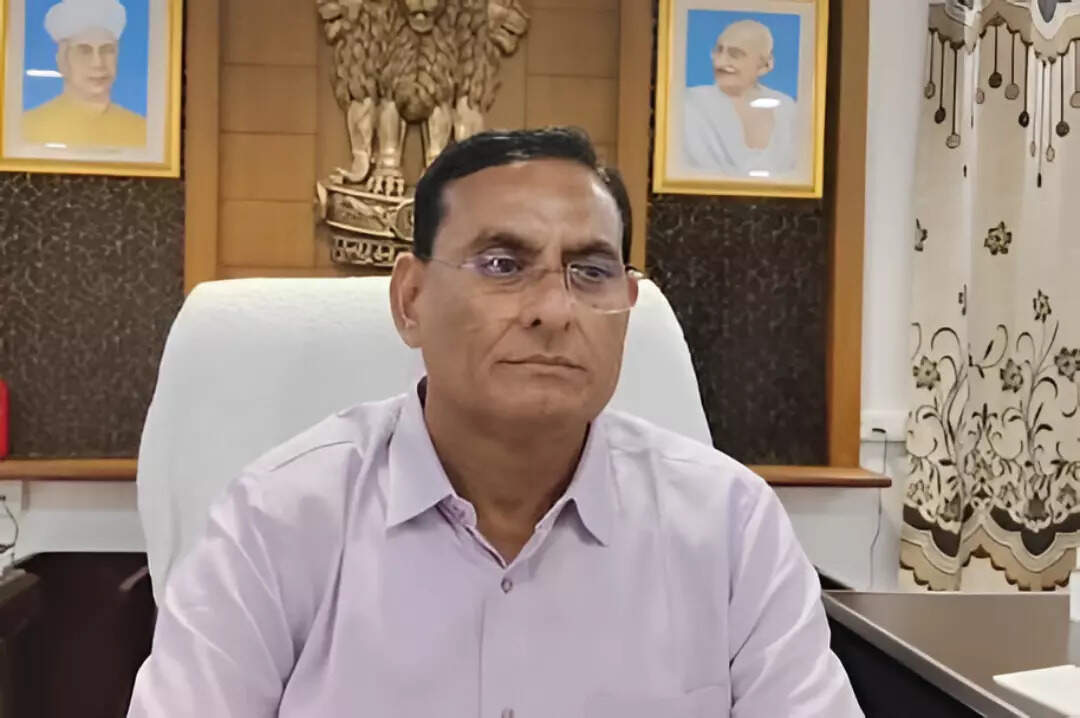
In an interaction with ET Government, Sita Ram Jat, Director, Secondary & Elementary Education, Government of Rajasthan, outlines how these measures are reshaping academic accountability and student preparedness across the state.
Rajasthan has introduced major reforms in its examination system. What was the need for this shift?
Our top priority is creating a uniform and transparent evaluation system for all students across the state. Earlier, every district followed different examination formats, which led to variations in assessment. To address this, we introduced the State-Level Common Examination for Classes 9 to 12.
From the 2024–25 session, semi-annual and annual exams in 84 subjects are being conducted through common question papers for more than 41 lakh students. This has standardised academic evaluation and ensured fairness.
We have also integrated competency-based assessment, digital question paper distribution, and AI-based OCR evaluation. These technologies ensure accurate checking and timely, error-free results. Through the Teacher App, parents and teachers can now monitor students’ learning levels and plan remedial measures.
The reintroduction of Class 5 and 8 Board Exams has restored academic accountability by discouraging automatic promotion. Rajasthan is also taking the lead in oral assessments—AI-based Oral Reading Fluency (ORF) has been carried out for Classes 3 to 8, and Prakhar 2.0 has made Rajasthan the first state to launch ORF remediation. For Classes 1 and 2, NIPUN Rajasthan continues to strengthen foundational literacy and numeracy.
The School Health Screening Programme has gained national attention. What impact has it created?
A student’s health is directly linked to learning outcomes. Keeping this in mind, we conducted a state-wide School Health Screening Programme, covering nearly 75 lakh students through a mobile application. The data helped us identify about 60,000 children who required surgeries. After medical verification, treatment procedures have already begun. Additionally, thousands of students received free spectacles after their eye tests.
This initiative was recognised with the Gold SKOCH Award 2025, which reflects its scale and effectiveness. We will continue the programme in the coming academic session to ensure students receive timely health interventions.
What are the key steps taken by Rajasthan to implement the National Education Policy (NEP) 2020?
Rajasthan has adopted a comprehensive and structured approach to implementing the NEP. Under the Mukhyamantri Shikshit Rajasthan Abhiyan, we have developed a multi-year framework built around three core pillars: The NEP Child, The NEP Teacher and The NEP School.
Initiatives such as Digital Praveshotsav, On-Demand Exams, and ORF interventions showcase our commitment to NEP recommendations. The impact of these programmes has been significant, and the state government has now recognised this initiative as a flagship scheme.
Rajasthan is shifting its academic session to 1 April. How will this benefit students and teachers?
The new session, starting 1 April, aligns with the CBSE calendar and offers several educational advantages. It increases the number of academic working days and gives students more time for revisions, projects, practical work and structured learning.
This is particularly helpful for students preparing for NEET and JEE, who will now get a longer preparation window. The shift will also ease teachers’ workload related to examinations, admissions and planning.
Starting academic activities before summer vacations helps maintain learning continuity. Overall, this calendar will make academic and co-curricular planning more organised, effective and student-centric.
Digital learning is expanding rapidly in the state. What progress has been made, especially in rural areas?
Rajasthan is witnessing strong progress in digital education. Schools, particularly in rural regions, are being upgraded with digital boards, robotics labs, virtual libraries, e-content modules and modern teaching tools.
Platforms such as Shala Darpan and VSK provide real-time data on attendance, assessments and academic progress, enabling transparent and efficient decision-making. Teachers also receive digital lesson plans, online training and access to content repositories, which makes classroom delivery more effective.
Our goal is to ensure that every child—regardless of location—receives quality, inclusive and technology-enabled education, contributing to the vision of a truly Digital Rajasthan.