Rajasthan’s School Education Department is driving a wide-ranging transformation to bridge the gap between government and private schooling. From digital classrooms and upgraded infrastructure to skill-based learning, sports integration, and stronger community engagement, the focus is firmly on holistic, future-ready education.
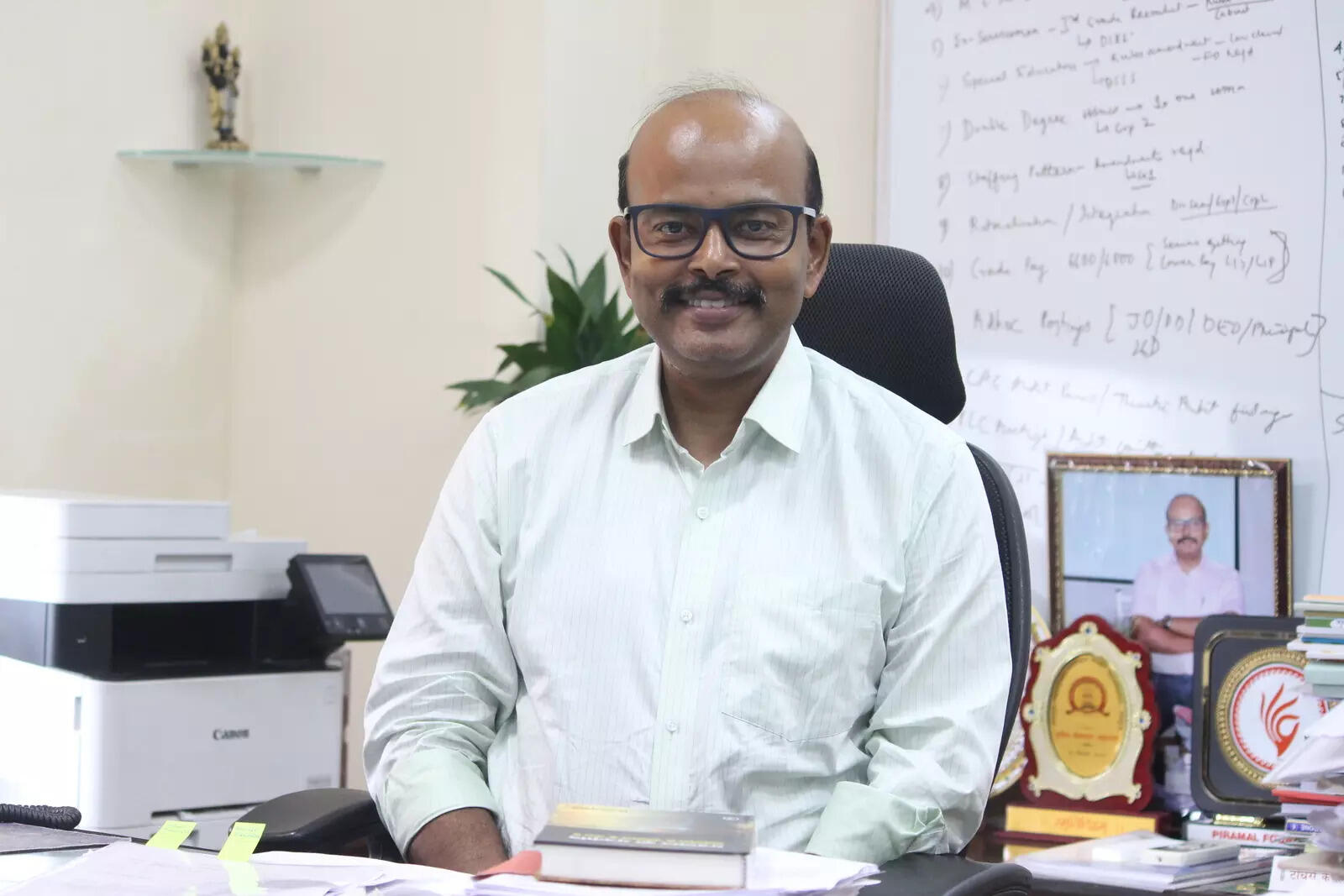
In an interaction with ET Government, Krishna Kunal, Secretary, School Education Department, outlines the state’s reform agenda and its measurable impact on students, teachers, and school ecosystems.
In recent years, what concrete steps have been taken to bring government schools at par with private institutions?
The Rajasthan government is fully committed to ensuring that every child receives quality education regardless of socioeconomic background. Under this mission, a series of large-scale modernisation measures have been implemented across government schools.
To begin with, 4,010 government schools have been equipped with two smart classrooms each, enabling digital learning through IFPD (Interactive Flat Panel Display) and internet-based learning modules. This initiative is helping students experience an engaging and technology-driven classroom environment.
Further, Robotics Labs have been established in 501 Mahatma Gandhi English Medium Schools, encouraging hands-on learning in science, innovation, and technology. Activity-based learning models are being promoted to help students understand concepts deeply rather than memorise information.
Infrastructure and campus environments have also seen marked improvement. Cleaner, greener campuses and upgraded buildings have elevated the learning atmosphere. Human resource strengthening has been equally critical—over 24,000 new teachers have been appointed, and more than 45,000 teachers promoted, ensuring that capable and motivated educators nurture classrooms.
What key schemes are being implemented to ensure children from economically weaker sections have access to quality education?
Our primary aim is that no child should be deprived of education because of financial constraints. Under the Right to Education (RTE) initiative, Rajasthan is ensuring free and inclusive education for children from economically weaker sections.
At the same time, various scholarship and incentive schemes — such as the Gargi Award Scheme, the Mukhyamantri Balika Protsahan Yojana, the Indira Priyadarshini Award Scheme, the Mukhyamantri Hamari Beti Yojana, and the Aapki Beti Yojana — have provided financial assistance and motivation to lakhs of girl students. In fact, under these five schemes, a total of 4,07,131 girls have benefited, with 17,853.73 lakhs transferred directly to them.
To support accessibility, 10.5 lakh bicycles and over 88,000 tablets with internet connectivity have been distributed among students. These schemes have not only reduced the dropout rate but have also built self-confidence among children, especially in rural and semi-urban areas.
How is the department preparing students for skill-based and career-oriented learning?
The education landscape today demands more than textbook knowledge. Rajasthan has therefore integrated vocational and skill-based training into the curriculum for Classes 9 to 12.
Students receive practical, hands-on training under the supervision of trained instructors, while teachers undergo dedicated training in vocational pedagogy. This ensures alignment between academic learning and industry expectations.
Regular career fairs, mentorship sessions, and career guidance camps help students understand diverse professional pathways. Interactions with entrepreneurs, domain experts, and academicians strengthen career readiness and help students make informed choices based on their interests and abilities.
The department has also partnered with the Centre for Creative Learning at IIT Gandhinagar to introduce Activity-Based Learning and Curiosity Kits, fostering joyful, engaging, and exploratory learning environments that go beyond conventional classroom boundaries.
What initiatives promote sports and co-curricular activities? Are these now part of the curriculum?
Holistic development is a central pillar of Rajasthan’s education strategy. Sports, arts, and cultural activities have been formally integrated into the regular school curriculum.
The department has formally integrated sports and cultural activities into the regular school curriculum. Rajasthan’s students have shown remarkable achievements in this area — in 2023–24, they won 22 medals (12 gold, seven silver, three bronze), and in 2024–25, this number increased to 43 medals (12 gold, 18 silver, 13 bronze) in the Under-14 category at national-level competitions.
Special focus is being given to developing well-equipped playgrounds through departmental convergence. These efforts not only nurture athletic excellence but also strengthen students’ confidence, teamwork, and leadership.
How is the department strengthening the school–community partnership model?
We believe education is a collaborative responsibility. To strengthen community engagement, Rajasthan organised a Mega Parent-Teacher Meeting (PTM) across all government schools on National Unity Day, 31 October 2025. The participation was remarkable—57 lakh parents and community members, nearly 65%, joined the event.
Parents received detailed updates on their children’s academic progress, attendance, and overall development. On the same day, Krishna Bhog special diets were served in 31,000 schools, supported by community members and literacy volunteers.
This initiative deepened trust and accountability between schools and families. The department is also empowering School Development and Management Committees (SDMCs) and recognising community contributions through the Bhamashah Samman program.>